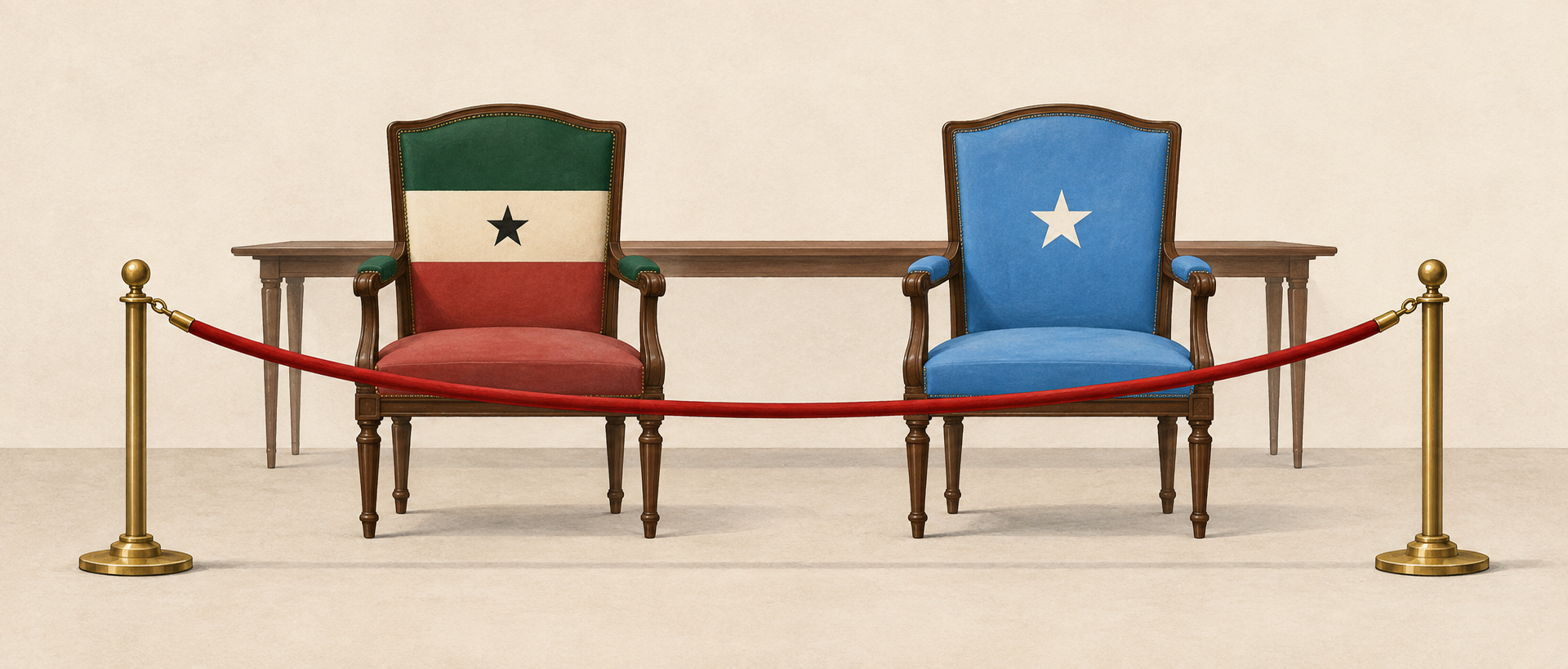
President Irro may have supplied more than a joke when he suggested that the next Somaliland and Somalia talks could take place in Tel Aviv. Israel recognises both countries as sovereign states. His line points to a real policy, the Sovereign Parity Doctrine.
Any talks must be facilitated by a state that recognises both Somaliland and Somalia as sovereign states, or recognises neither.
A mediator that recognises Somalia while treating Somaliland as its territory has already endorsed one party's claim. It cannot call that starting position neutral.
Turkey supplies the warning. Ankara sponsored earlier rounds, then former Turkish foreign minister Ahmet Davutoğlu boasted that Turkey answered Western moves towards recognising Somaliland by convening the 2013 talks and "foiled that plan." That was containment presented as mediation. Repeating the same model while expecting a different result is not diplomacy. It is strategic madness.
Somaliland brings a government chosen through competitive elections. Somalia brings clan rule and warlords dressed up as a federal system. Al Shabaab runs a parallel administration across most of southern and central Somalia, despite military support for Mogadishu from AUSSOM and Turkey. It governs, taxes and enforces its rule. Islamic State also retains active cells.
Somalia's governing predicament belongs alongside Yemen's hotel government based in Riyadh. Seating it beside Somaliland conceals that institutional gulf. Hargeisa already lends Mogadishu the appearance of an equivalent government. When Somalia uses the occasion to perform authority over a country it does not govern, the result is cosplay sovereignty.
The Montevideo criteria concern a permanent population, defined territory, government and capacity for international relations. Somaliland's demonstrated statehood merits wider recognition on that basis. International policy instead discounts functioning institutions while privileging Somalia's diplomatic standing. Somalia's continuing legal personality does not settle Somaliland's separate claim of state continuity.
In January 2013, Hillary Clinton recognised Somalia's new government. President Irro's warning at the Hudson Institute identifies the consequence for Somaliland. The recognition that was meant to build Somalia has been used to strangle Somaliland. That was never the plan.
The purpose of talks must be peaceful coexistence and preventing war. Somaliland's wider recognition belongs to its relations with the international community. Foreign governments created the diplomatic imbalance through their own choices. They must correct it themselves, rather than assigning Mogadishu a veto over recognition.
Somalia may recognise Somaliland very late. Pakistan recognised Bangladesh in 1974, after countries including the United States in 1972. The relevant lesson is the sequence, not identical legal histories. A neighbour's eventual acceptance can follow wider recognition. Peaceful relations need not wait for it.
Somaliland has already tried restricting participation. Parliament relaxed restrictions on Somalia conferences in February 2012. That experience demands a durable rule governing engagement, so each invitation does not reopen the same argument over whether to attend.
Hargeisa should adopt the doctrine for every future invitation, rather than improvise conditions before each meeting. This deliberately narrows the pool of mediators. A state seeking that role must change any unequal recognition policy before requesting concessions from Somaliland.
The warning to Somaliland is clear. Act like a non-state actor, and the world will build its policy around treating you like one. Act like a sovereign state, and you strengthen the precedent for state-to-state treatment. Once the weaker precedent hardens, reversing it becomes far harder.
Israel set the bar. Don't lower it yourself.