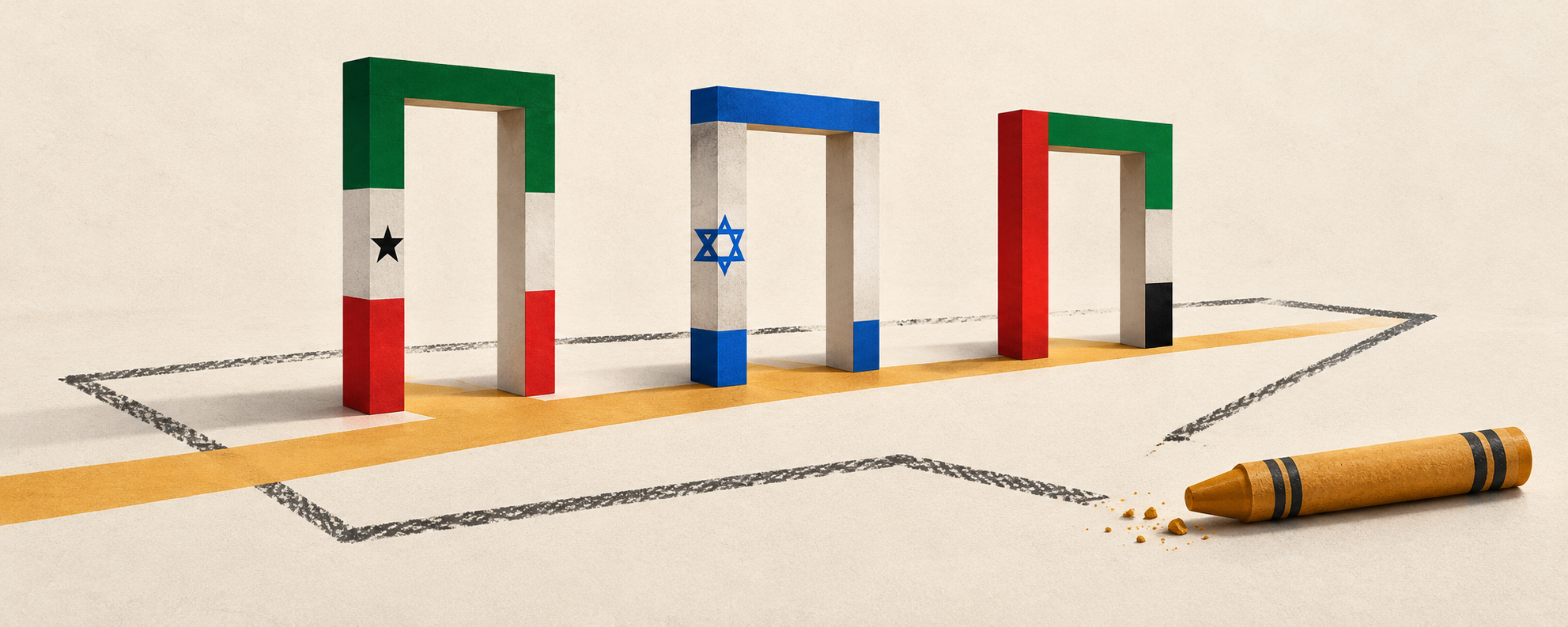
People love to shoehorn countries into neat little blocs because it makes geopolitics easier to stereotype and simplify. They shade countries on a map and present their brain rot as sophisticated, careful analysis. The colours conceal the question that matters: what has each country agreed to do, and on whose terms?
Nobody signed anything called the "Hexagon". Netanyahu mentioned the idea once. That was it. Turning that remark into a settled alliance confuses a politician's preferred arrangement with commitments that other sovereign states have actually made. Pakistan is now saying Iran could join its own club. So much for these supposedly fixed geopolitical axes.
Minilateralism is the mother of all evils when it becomes a device for making smaller states inherit somebody else's enemies. It is often the coward's position between realism and liberalism. It borrows realism's language of power while subordinating national interests to a camp, and liberalism's language of cooperation while making regional division permanent.
Small groups can serve specific common interests. A defined commitment to address a shared threat is different from allowing another capital to decide every subsequent friendship and quarrel.
Somaliland needs a principled foreign policy built around an interconnected, stable Red Sea region. Netanyahu's vision of opposing blocs points in the wrong direction. Somaliland's government should judge regional competition by the economic opportunities and coexistence it creates rather than the countries it excludes.
Israel is surrounded by adversaries, which makes its search for security understandable and expanding the circle of coexistence and peace essential. The Abraham Accords demonstrate the value of turning hostility into relations. Israel's security policy should address the causes of that hostility as well as immediate threats.
I see Somaliland, Israel and the UAE connected by a forward-looking alignment around civil nationalism, the same broad idea that helped build many of the most successful states in Europe, Asia and America. By civil nationalism, I mean political belonging organised around citizenship, common institutions and a shared national future. The country cannot be reduced to a clan, a sect or the person governing it.
This is a direction of state building, not a claim of identical political systems or settled questions of belonging. The UAE's inclusion makes clear why civil nationalism cannot simply mean democracy versus autocracy. A national project and a ruler's survival can overlap, but development alone does not establish civic belonging. The standard is whether institutions and opportunities give citizens a durable stake in the country.
Much of the rest of the regional political order consists of autocratic regimes borrowing whatever ideology, alliance or label helps sustain power. Professed affinity is unreliable when national interests remain disposable whenever those in power need a new cause. Cooperation must rest on mutual respect for each country's security and prosperity.
If the objective is a viable national future, a peaceful neighbour can offer more than a useful enemy. Trade creates an interest in one another's success, while coexistence allows resources to serve national development instead of permanent confrontation. These incentives do not abolish conflict, but they give states a reason to resolve it. Unlike an alignment held together only by shared enemies, cooperation built on that basis should survive peace with a third country.
We need to stop treating every mention of Somaliland as some kind of win. Hargeisa should ask three questions of any proposed agreement. Does it strengthen Somaliland's institutions, security and economic opportunities? Are its obligations defined and reciprocal? Does it preserve our ability to pursue peaceful relations elsewhere?
Geopolitics isn't a kids’ colouring book.