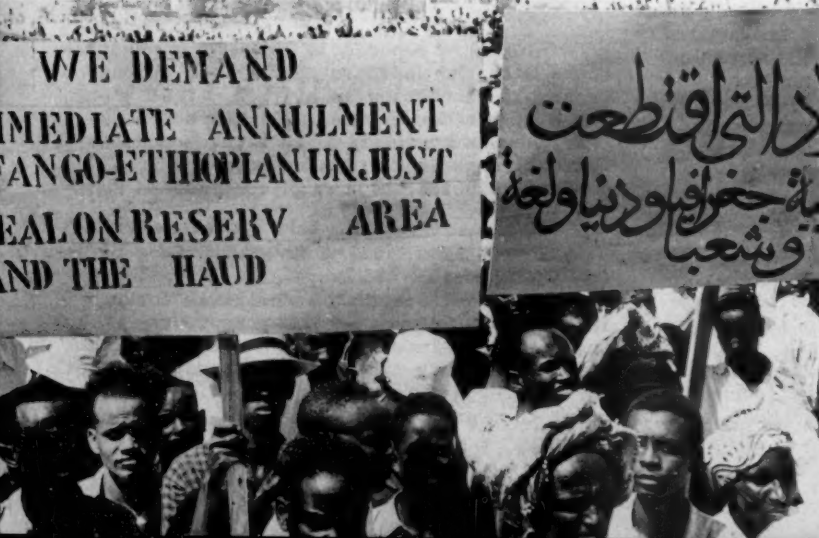
Image: 1954 Protest against the British transfer of the Haud Somaliland to the Ethiopia
Many observers fundamentally misunderstand why Somaliland chose to pursue a union with Somalia in 1960 (a union that was never legally consummated, as I argued in The Union That Never Existed). The prevailing narrative suggests this decision was driven by an ideological commitment to pan-Somali nationalism. The reality is rooted in a much deeper political wound inflicted by British colonialism. In the late nineteenth century, Britain signed treaties of protection with the clans of Somaliland. London later compromised these agreements by signing treaties with Ethiopia that ceded vast territories historically utilized by Somalilanders. The Haud and the Reserved Areas were effectively handed over to Ethiopian control.
The loss of this land was a monumental blow to the protectorate. The excised territories constituted roughly one third of Somaliland's original landmass. This was not merely empty space on a map. These regions were central to the daily life, grazing cycles, water access, and social identity of the people. When the borders shifted, an entire population was transferred without their consent. Today, a significant portion of the Isaaq, Samaroon, and Dhulbahante clans live as Ethiopian citizens. They did not migrate to a new country. The border simply moved over their ancestral lands. This reality stands in stark contrast to the Ogaden region, where populations voluntarily chose integration into Ethiopia. The people of the Haud and Reserved Areas were never granted such agency.
The Betrayal
This period in the late 1950s was the major turning point in national consciousness. Britain officially transferred the administration of the Haud and Reserved Areas to Ethiopia. Somalilanders viewed this as a profound betrayal of the original protection treaties. Mass protests erupted across the territory, laying the groundwork for the independence movement. Political delegations were swiftly organised to petition London. The quest to restore these annexed lands cemented itself at the centre of the emerging national consciousness. This historical grievance became the primary engine driving political strategy in Hargeisa.
When independence arrived in 1960, the decision to unite with Somalia was a calculated manoeuvre. The ultimate objective was not to dissolve Somaliland into a utopian political project. The union was envisioned as a mechanism to consolidate strength and force the reclamation of the lost territories. Pan-nationalism was merely a temporary political vehicle. The true ambition was always the restoration of historical rights and ancestral lands, a pragmatic calculation that challenges the assumptions detailed in Isaaqland: The Mother Of Misconceptions.
Critics often accuse Somaliland of abandoning ethnic nationalism. The truth is that Hargeisa never viewed such nationalism as a permanent destination. Somaliland was only ever searching for its land, its rights, and its own sovereign voice.
Looking at today, it is as if nothing has changed!