Recognition is usually discussed through the interests of states. Diplomats ask who gains access, which alliance shifts, and how the regional balance changes. That language matters, but it rarely explains what recognition means to the people who have carried Somaliland since 1991.
Israel changed Somaliland's status on 26 December 2025 when it became the first country to recognise the restored republic. The relationship has since produced Somaliland's first ambassador to Israel, an embassy in Jerusalem, and Somaliland's first presidential state visit abroad. Yet the clearest evidence of recognition's human meaning was the public joy that followed the decision.
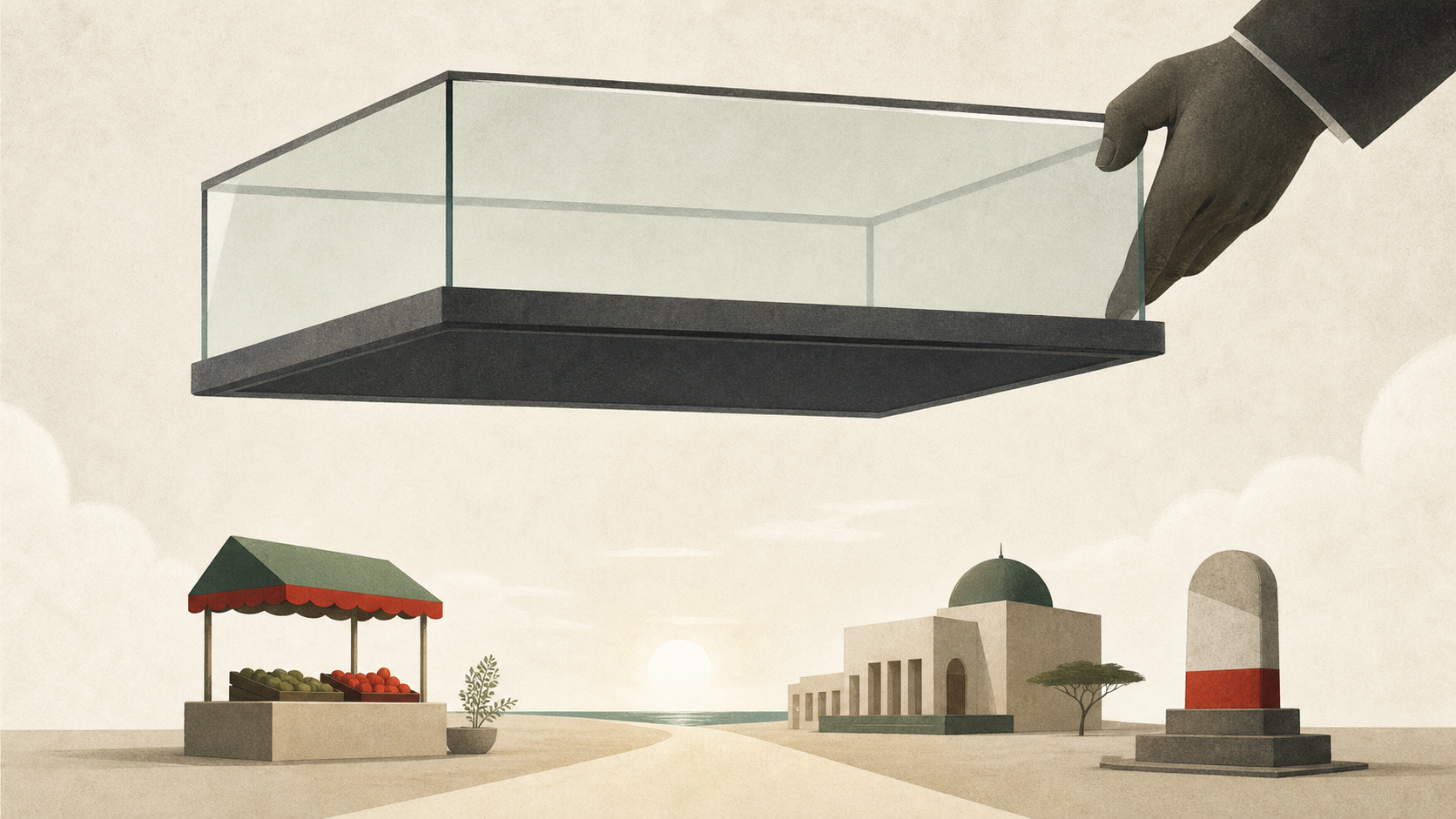
For Somalilanders, wider recognition would be a national release. It would free a collective achievement from the diplomatic enclosure that still keeps it misnamed and unable to realise its full value. That achievement belongs to everyone, from the tomato seller who sustained a household and paid into the local economy to the communities that reconciled after war, the citizens who accepted election results, and the institutions that preserved public order through decades of isolation.
A Nation Honoured
Somaliland built itself for decades before receiving international recognition and without the scale of assistance given to states that failed despite extensive support. Its homegrown system of government was not constructed as a performance for foreign approval. It was built because Somalilanders needed peace, authority, and a common future.
Recognition is therefore not a request for rescue. It is respect for work already completed and sacrifices already made. The world would not be creating Somaliland. It would be honouring the people who created and sustained its modern institutions.
This distinction also explains why recognition is not an act of self determination. Somaliland exercised that right when it became independent on 26 June 1960 and concluded treaties in its own name that were registered with the United Nations. It later went into a de facto union with the State of Somalia, which had formerly been administered by Italy, but the attempted union between those two sovereign countries was never legally completed. The documentary sequence behind that conclusion is set out in Somaliland's official legal account. The claim today rests on restored sovereignty and state continuity, not on seeking permission to secede.
Recognition would acknowledge a state that already exists. It would not grant a people a right they exercised sixty six years ago.
Memory Receives Justice
Recognition also carries a profound meaning for the families of the victims of the massacres against the Isaaq people. Somaliland's legal case does not depend on those atrocities. It begins with the sovereignty achieved in 1960 and the legally incomplete attempted union.
The human meaning is different. Human Rights Watch documented how the Somali government waged war on the Isaaq civilian population through killings, bombardment, torture, poisoned wells, and the destruction of livelihoods. It described the northwestern territories as the part of the country most thoroughly brutalised by the regime. Recognition would form part of the moral and legal justice owed to families who survived that violence and then helped build a stable state from its aftermath.
No diplomatic act can restore the dead. Recognition can still refuse the injustice of treating the state built by survivors as though it has no independent name.
The Future Opens
The practical gains could reach ordinary lives. Direct agreements could attract more investment, create jobs, strengthen institutions, improve access to international finance, and make travel less burdensome. Formal partnerships could also deepen security cooperation around the Gulf of Aden and the approaches to the Red Sea.
Recognition would not automatically produce any of these outcomes. It would remove barriers that prevent Somaliland from pursuing them on equal terms. The World Bank has identified weak access to finance and exceptionally low investment as major constraints on Somaliland's private sector. Recognition would make it easier to address those documented financial barriers through direct agreements rather than administrative workarounds.
These are not abstract privileges. A business able to contract under its own country's name, a student able to travel on a widely accepted passport, and a government able to negotiate finance directly all experience sovereignty in material form. Decades of exclusion have imposed a measurable economic cost on Somaliland. Wider recognition would begin releasing value that Somalilanders have already created.
An Identity Restored
The deepest injury is not only that Somaliland remains partially recognised. The world also insists on classifying it as part of Somalia, attaching Somalilanders to an international image shaped by war, terrorism, piracy, and state failure.
That image does not describe Somaliland's history, institutions, or public record. Yet it follows its citizens into investment decisions, political forums, passports, banking systems, and routine logistics. A country that maintained its own security and built its own political order is made to carry the liabilities of a state that does not govern it.
Limited recognition closes doors. Misidentification places Somaliland behind someone else's door.
For Somalilanders, recognition would mean that their achievement finally bears its own name, their dead are remembered within the state that rose after them, and their future is no longer confined by a foreign failure.
Somaliland's allies in the United Kingdom, the United States, the United Arab Emirates, and Ethiopia should understand what is ultimately at stake and extend formal bilateral recognition. Recognition may emerge through transactional agreements, but its deepest meaning can never be exchanged. It touches national achievement, justice, identity, and memory.
Israel has already shown the result. Somaliland's first ambassador told President Herzog that the relationship was not only between governments but also between peoples, while conveying the public's appreciation for the country that recognised Somaliland first. A country that recognises Somaliland from first principles earns a depth of loyalty and gratitude that no transaction can purchase.
Recognition would not give Somaliland its country. It would give the country back to the world.