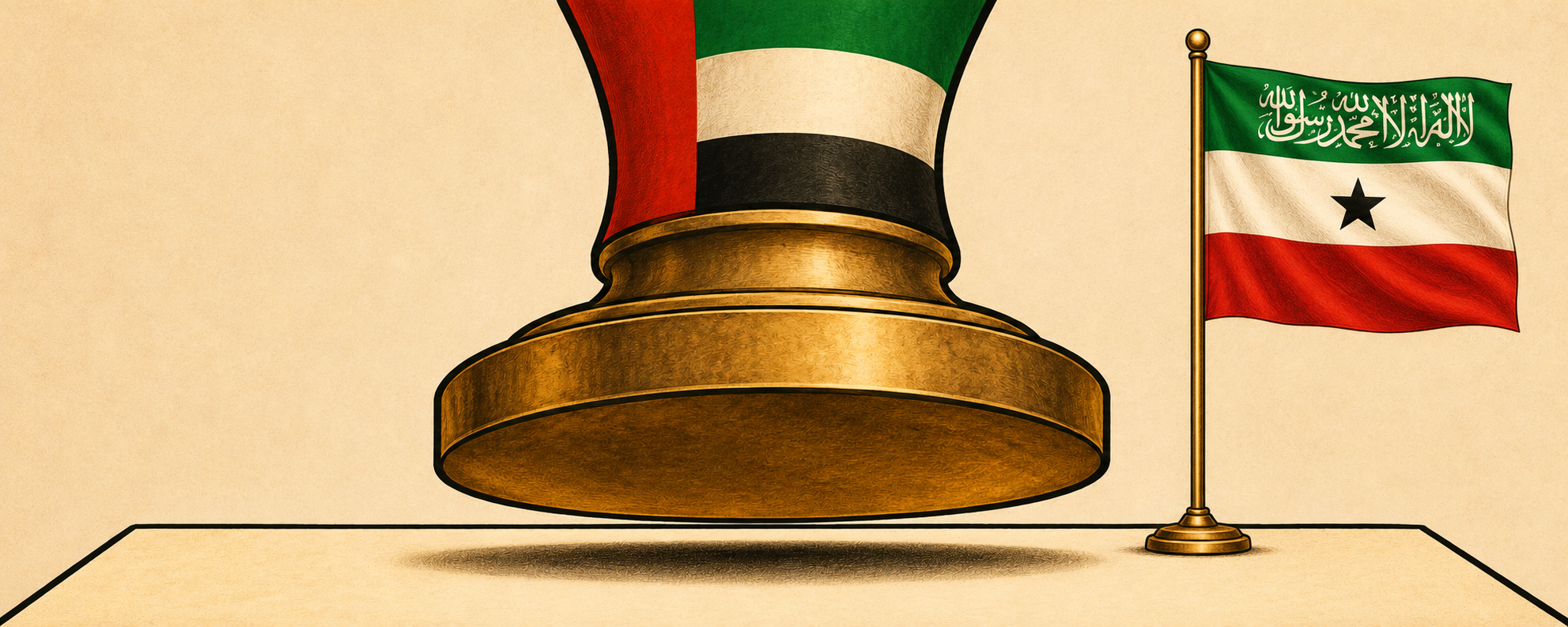
On 17 November, Hassan Sheikh Mohamud accused the UAE of undermining Somalia's sovereignty, backing rival political factions and armed groups, and playing a role in Israel's recognition of Somaliland (as if that were a bad thing). The next day, Somalia's Foreign Ministry demanded that the UAE conduct its diplomatic and security dealings with Somalia through Mogadishu. Anwar Gargash, diplomatic adviser to the UAE president, pushed back and questioned whose interests Hassan Sheikh was serving. On 19 November, Somaliland's Foreign Ministry reaffirmed that Hargeisa alone has authority over its foreign relations. It restated the basis for Somaliland's restored statehood. Somaliland gained independence within its own established borders five days before Somalia, and the attempted union never acquired legal force through an Act of Union ratified by both sides. I welcome the ministry repeating these points. The media and others keep recycling the lie that Somaliland is seceding from Somalia.
Put Somalia's international recognition aside for a moment. Of Somalia's warlords, Hassan Sheikh makes the grandest claim to authority. Somalia remains a failed state, and his administration directly controls only a fraction of the territory it claims to govern. Even that control leans heavily on US taxpayer support and African Union protection. Yet he has the nerve to lecture the UAE and other sovereign states.
No constitutional consensus. No direct popular mandate. On 5 November, Somalia's Supreme Court ruled that the four-year mandate Hassan Sheikh received from parliament in 2022 had expired in May 2026. His administration claims it can stay until May 2027.
Frankly, we have ourselves to blame for allowing this shitshow. Somaliland's government should formally declare that it does not recognise Hassan Sheikh's administration as the legitimate representative of the Somali people and invite other countries to do the same.
Hargeisa can go further. Reciprocity is a basic principle of diplomacy, and Somaliland can exercise it as a sovereign state. As long as Mogadishu refuses to recognise Somaliland as a country, Hargeisa should formally withhold recognition of Somalia as a state and withdraw any recognition it has already extended. That would put Somaliland's challenge to Somalia's premature international recognition on the diplomatic record and give the Mogadishu warlords' missteps a consequence.
Abu Dhabi has its own decision to make. I'm certain it has taken these attacks seriously, and I reckon they have strengthened its conviction that the UAE should recognise Somaliland and deepen an already valuable strategic partnership.
Could Mogadishu be acting on leaked intelligence or an early signal that recognition is coming? Possibly. With Abu Dhabi already busy on several fronts, I doubt a recognition announcement is imminent. Mogadishu may be acting on bad intelligence. I would also consider whether Saudi Arabia and others are coordinating pressure on Abu Dhabi, with different capitals taking turns confronting the UAE every few months. First Algeria, now Somalia. The sequence alone tells us little about whether Riyadh had a hand in either dispute.
Another possibility (as pointed out by Rashid Abdi) is that Mogadishu wants to complicate the UAE's bid to make Lana Nusseibeh the next UN Secretary-General. Somalia sits on the Security Council, which recommends a candidate to the General Assembly. That gives Mogadishu a voice among the governments weighing her bid and could explain why it chose this moment to put Abu Dhabi on the defensive.
Somaliland gains more if Abu Dhabi chooses its own moment. Other governments will have a reason to follow if they see recognition as a decision grounded in principle and shared strategic interests. If it comes across as a reprisal for Mogadishu's latest attack, those governments can file it away as somebody else's quarrel. Meanwhile, recognition would win the UAE the lasting goodwill of some six million Somalilanders. I see little reason for other countries to rally behind Mogadishu because of it.
To explain what I mean when I say the UAE prepares carefully and chooses its moment, consider how it left OPEC and OPEC+. Abu Dhabi invested in its ability to produce more oil and reviewed its production policy and capacity before setting a 1 May departure, standing firm under pressure from fellow producers. The same discipline shaped its response to Iranian attacks during Trump's war. The UAE had air defences ready to intercept incoming missiles and drones, and it made its position clear from the outset. It would defend its territory and bar its use for attacks on Iran. That combination of preparation and clarity has strengthened the UAE's standing across the region and beyond.
I expect the UAE to recognise the Republic of Somaliland. The question is when Abu Dhabi will judge it has prepared enough. The UAE has a strategic responsibility to help protect Arab interests in the Horn and strengthen security in the Red Sea and Bab al-Mandeb. It can fulfil that responsibility through direct partnerships with Somaliland and Ethiopia.